
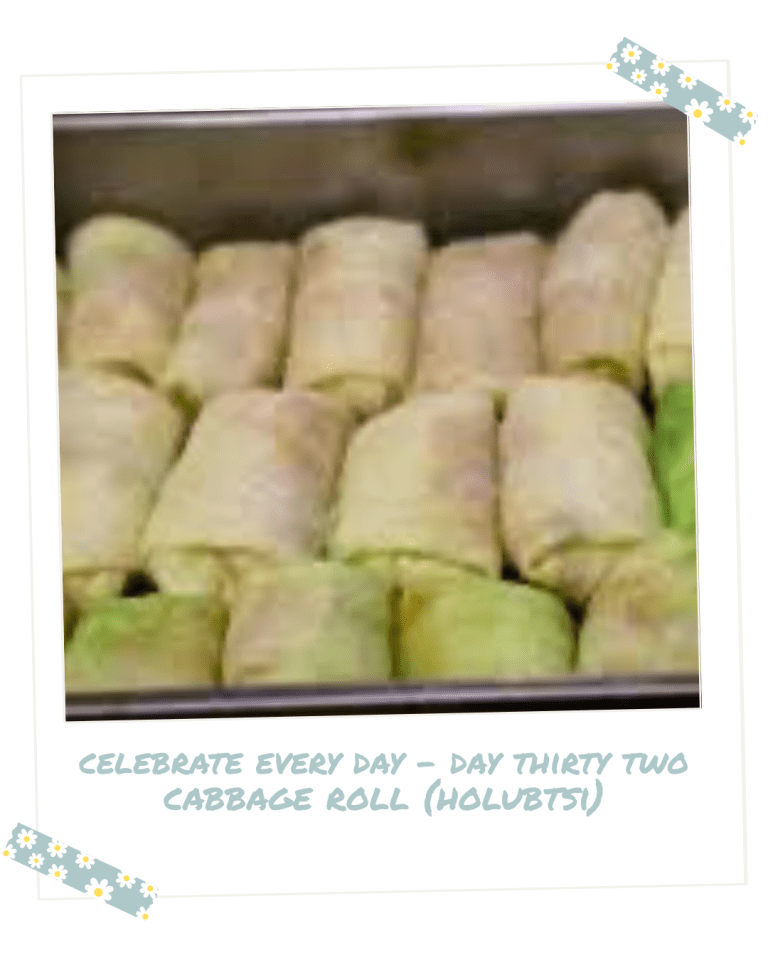
It starts with steam, curling from a glass dish, cabbage leaves soft and curling around doughy bundles. There’s no tomato sauce, no rice, no ground beef. Just tender, blanched cabbage and pillows of dough baked until golden and served with a generous dollop of sour cream. Holubtsi, they called them. Cabbage rolls, but not like the ones in cookbooks or YouTube videos. These were the kind we made in our kitchen, passed down through memory, not measurement.
My version of holubtsi was simple: thawed frozen dough, cabbage leaves soaked soft in hot water, rolled like sleeping bags, and baked in a glass dish. I don’t remember Grandma ever using a recipe. Maybe she did once, long before it was mine to hold. Maybe she even used leftover pierogi dough. No one really knows anymore. There’s no index card with her handwriting, no photo tucked in a cookbook. Just what I remember.
This month, as I worked on my final research project, I tried to trace that memory, to find something that matched our version in academic journals, cookbooks, interviews. I found recipes called holubtsi, yes, but none like ours. One Ukrainian cook interviewed rolled his with meat and rice. Delicious, I’m sure, but not ours.
Still, the trail of breadcrumbs led me somewhere better. My instructor read my proposal, Roots of Resilience: Ukrainian Potatoes, Immigrant Women, and the Power of Food Memory, and told me something I didn’t even realize I was waiting to hear:
“This could absolutely become something for you to consider to be published in a history, culinary, or cultural magazine.”
Gratitude, hope, and possibility! Yes, all of it lives in those words. This isn’t just a final paper. It’s the first step in something bigger. I want to research and write about the positive cultural impacts of the Columbian Exchange, one ingredient at a time. Potatoes in Ukraine. Tomatoes in Italy. Cacao in Mexico. Maize in Africa. Not just what these foods are but who they’ve made us to be. These aren’t just ingredients. They are identities, they are survival, they are love.
I used to think stories like ours got lost; handed down through generations until they faded, too blurry to tell. But they don’t have to be lost. We can tell them again. We can write them down. We can research and remember and share. Because food isn’t just food … it’s history and resilience and grace wrapped in a cabbage leaf, served with sour cream.
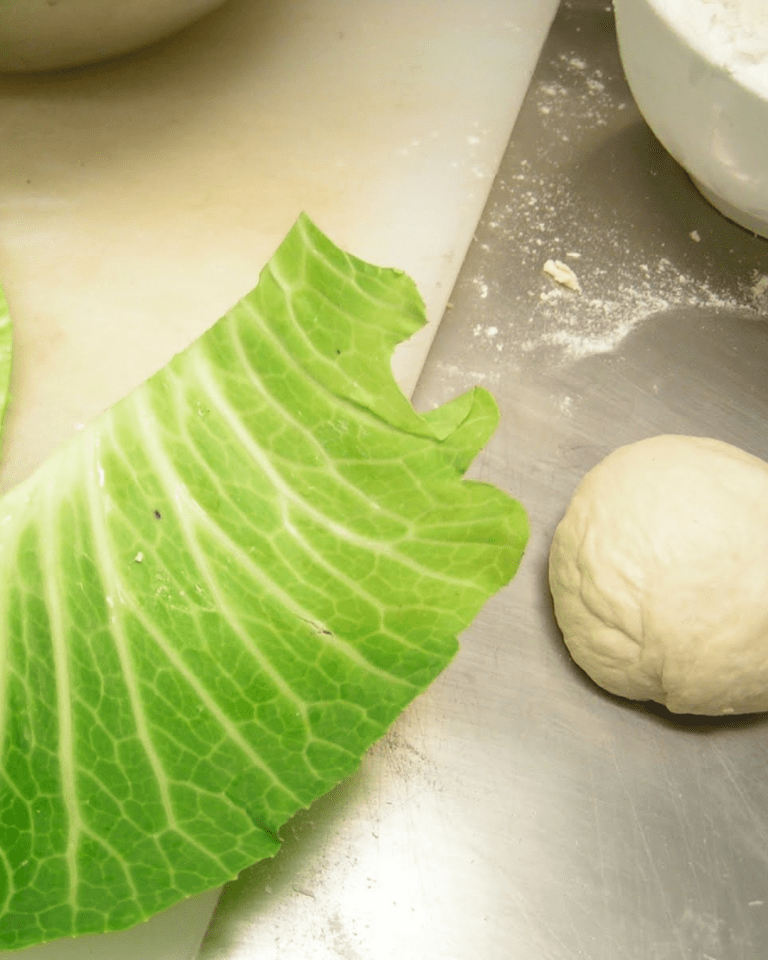
Childhood Cabbage Roll – Holubtsi
What You Will Need:
- 1 head green cabbage
- 1 loaf frozen bread dough, thawed
- Sour cream, for serving

What You Will Need To Do:
- Preheat oven to 350°F.
- Blanch cabbage leaves in boiling water until soft and flexible.
- Cut thawed dough into small portions.
- Wrap each portion in a cabbage leaf and place seam side down in a greased baking dish.
- Bake for 25–30 minutes, until dough is cooked through and edges of cabbage begin to brown.
- Serve warm with sour cream.
💬 Grandma Nameniuk’s tip: “Wrap it tight, but not too tight. Give it room to rise.”

This recipe might not show up in a traditional cookbook, but it lives in me. And now, maybe, in you too.
Gracefully yours,

Help keep the words flowing and the stories brewing.
Buy Me a Coffee
Reference
Niequist, S. (2024). Celebrate Every Day. Zondervan.
 Meal & Grace
Leave a comment